The transition from home to school is one of the most significant milestones in a young child's life. While every child develops at their own pace, research consistently shows that children who arrive at school with certain foundational skills — letter recognition, number awareness, color and shape knowledge, and basic vocabulary — tend to have smoother transitions and stronger academic trajectories. Educational apps, when used thoughtfully, can be powerful tools for building these school-readiness skills.
What Does School Readiness Mean?
School readiness is a multidimensional concept that extends far beyond academic knowledge. The National Education Goals Panel identifies five domains of school readiness: physical well-being and motor development, social and emotional development, approaches to learning (curiosity, persistence, attention), language development, and cognition and general knowledge. While educational apps primarily address the last two domains, their impact can extend to others as well.
A child who has learned to navigate an educational app independently has practiced self-regulation (choosing when to stop), persistence (trying again when content is challenging), and focused attention (staying on task without external prompting). These executive function skills are increasingly recognized as even more important to school success than specific academic knowledge.
Key Academic Skills Apps Can Build
Letter Recognition
Knowing the names and sounds of letters before entering school is one of the strongest predictors of early reading success. Apps like Sikho Kids present all 26 letters of the English alphabet with clear visual representations and audio pronunciations, allowing children to learn at their own pace through repeated, self-directed exposure. The app's Hindi Varnmala module adds particular value for children entering bilingual or Hindi-medium schools.
Number Sense
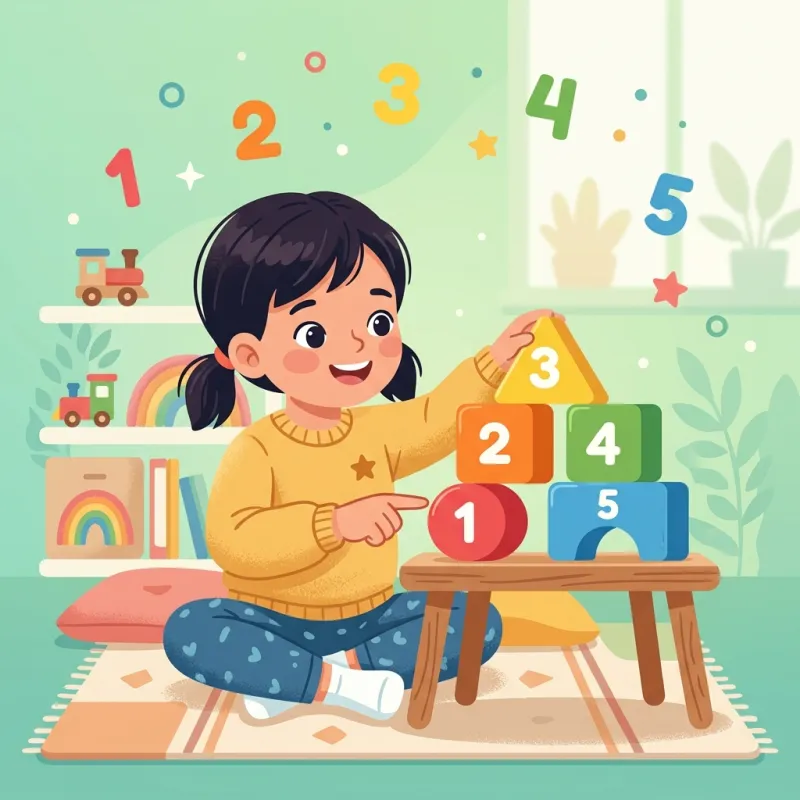
Understanding numbers from 1 to at least 20, counting objects with one-to-one correspondence, and recognizing written numerals are key numeracy goals for school entry. The numbers category in educational apps provides systematic exposure to numerals up to 100, with audio pronunciation that helps children connect written symbols to their spoken names.
Vocabulary Breadth
Children who enter school with larger vocabularies have significant advantages in reading comprehension, classroom communication, and social interaction. Apps with diverse content categories — animals, fruits, vegetables, vehicles, body parts, colors, shapes — naturally expand vocabulary by exposing children to words they might not encounter in their daily home environment.
Classification Skills
The ability to group objects by shared properties — all the animals together, all the fruits together, all the round shapes together — is a foundational cognitive skill for science, mathematics, and reading comprehension. Apps with organized content categories naturally demonstrate classification, and children who use them develop intuitive understanding of categorical thinking.
Strategies for Effective App-Based School Prep
Simply handing a child an educational app is not enough to ensure school readiness. The following strategies maximize the educational impact of app-based learning.
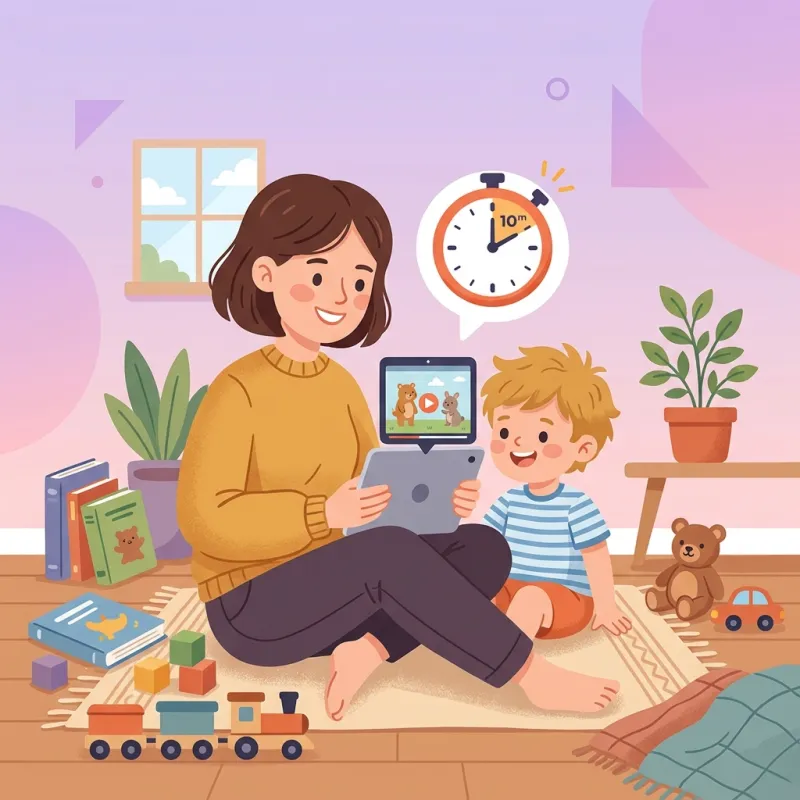
- Create a routine: Designate a specific, short time each day for educational app use. Consistency builds habits and ensures regular exposure to learning content. Fifteen to twenty minutes daily is sufficient for meaningful progress without risking screen fatigue.
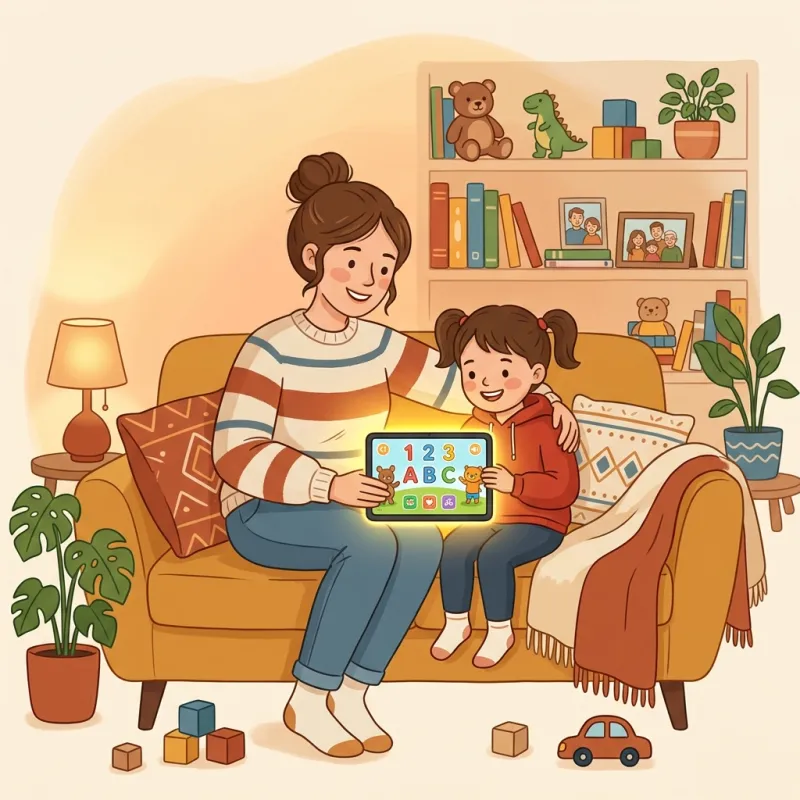
- Co-learn actively: Sit with your child during app sessions, at least initially. Ask questions about what they see. Extend learning by connecting app content to real-world experiences. If they learn about elephants in the app, find a picture book about elephants or visit the zoo.
- Track progress informally: Notice which categories your child gravitates toward and which they avoid. Comfort with specific categories often indicates mastery, while avoidance may signal areas that need more support. Gently encourage exploration of less-favorite categories without creating pressure.
- Balance with offline activities: Complement app-based learning with hands-on activities that reinforce the same skills. Practice letter recognition with magnetic letters on the refrigerator. Count objects during daily activities. Sort laundry by color. Draw shapes with sidewalk chalk. These physical experiences deepen and contextualize what children learn digitally.
- Celebrate progress: Acknowledge your child's growing knowledge with genuine enthusiasm. When they recognize a letter on a street sign or count the stairs accurately, celebrate these real-world applications of skills they have practiced in the app.
What Apps Cannot Replace
While educational apps are valuable tools, they cannot replace certain experiences that are essential for school readiness. Social skills — sharing, taking turns, resolving conflicts, following group instructions — can only be developed through interaction with other children and adults. Fine motor skills needed for writing require physical practice with crayons, pencils, scissors, and manipulatives. Gross motor development requires running, climbing, jumping, and physical play.
The most school-ready children are those whose days include a balanced mix of digital learning, physical play, creative expression, social interaction, and unstructured free time. Educational apps are one important ingredient in this mix, not the entire recipe.
Choosing the Right Apps
Not all educational apps contribute equally to school readiness. When evaluating apps for pre-kindergarten preparation, look for content that aligns with recognized learning standards and covers multiple domains. The interface should be simple enough for independent use — if a child constantly needs adult help navigating the app, the app is interfering with their development of independence and self-direction. The content should be ad-minimal and free from manipulative engagement tactics that prioritize time-on-app over actual learning.
Apps that offer diverse content categories, like Sikho Kids' twelve categories spanning literacy, numeracy, nature, and general knowledge, provide comprehensive preparation that addresses multiple readiness domains simultaneously. The combination of visual flashcards and audio pronunciation supports both vocabulary development and phonological awareness — two of the most important predictors of early reading success.
School readiness is not about knowing everything before day one — it is about having the curiosity, confidence, and foundational skills to embrace the learning journey ahead.
By using educational apps intentionally as part of a rich, balanced pre-school experience, parents can help their children arrive at the school gate feeling confident, curious, and ready to learn. The investment of fifteen minutes a day with a quality educational app can pay dividends that last throughout a child's entire academic career.