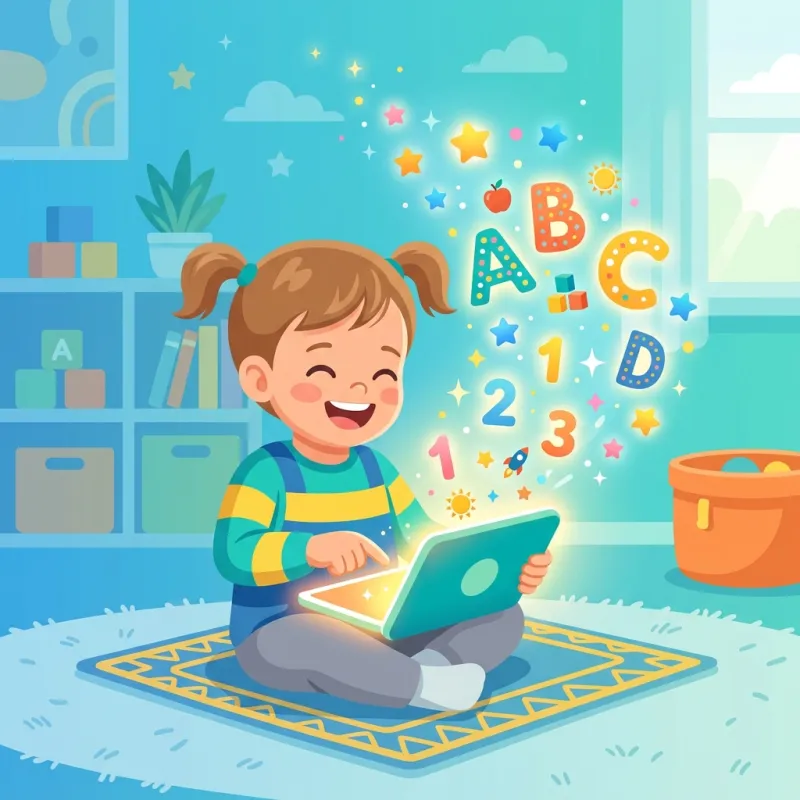
Walk into any preschool classroom and you will see children deeply absorbed in play — building towers, sorting colored blocks, pretending to cook meals, or racing toy cars. Play is not just something children do to pass the time; it is the primary mechanism through which young minds make sense of the world. Gamification in education harnesses this natural inclination, applying game-design elements to learning activities to make education as engaging as play itself.
What Is Gamification in Education?
Gamification does not mean turning education into a video game. Rather, it involves applying specific game mechanics — such as progress tracking, immediate feedback, incremental challenges, and reward systems — to educational experiences. The goal is to tap into the same psychological drivers that make games inherently motivating and apply them to learning contexts.
For early childhood education, gamification might look like earning a virtual sticker after completing a set of flashcards, watching a progress bar fill up as letters are mastered, or hearing a celebratory sound when a correct answer is given. These elements may seem simple, but they leverage fundamental principles of human motivation that are especially powerful in young children.
The Psychology Behind Gamified Learning
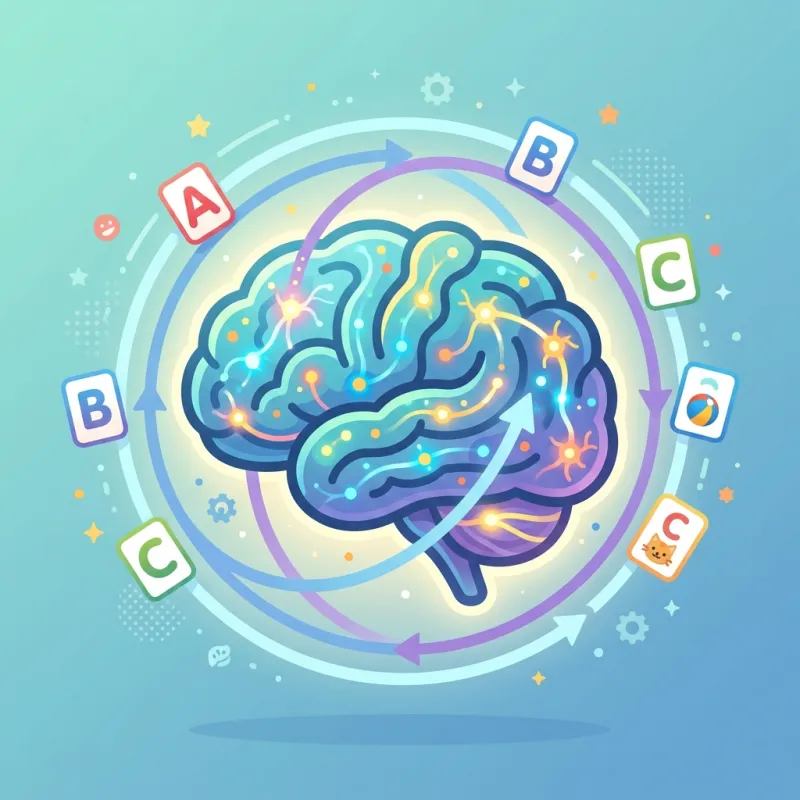
Several well-established psychological theories explain why gamification is so effective for young learners. Understanding these theories helps parents and educators make informed decisions about the educational tools they choose.
Operant Conditioning: B.F. Skinner's research demonstrated that behaviors followed by positive reinforcement are more likely to be repeated. In gamified learning, correct responses are immediately reinforced through visual and auditory rewards, strengthening the association between effort and positive outcomes. When a child in Sikho Kids successfully identifies a fruit and hears a cheerful sound, they are experiencing positive reinforcement that encourages continued engagement.
Flow Theory: Mihaly Csikszentmihalyi's concept of flow describes a state of complete absorption in an activity that is optimally challenging — not so easy as to be boring, and not so difficult as to be frustrating. Well-designed gamified learning experiences maintain this balance by gradually increasing difficulty and providing scaffolded challenges that keep children in the flow state.
Self-Determination Theory: This theory, developed by Deci and Ryan, identifies three core psychological needs: autonomy (feeling in control), competence (feeling capable), and relatedness (feeling connected). Gamified learning apps satisfy these needs by allowing children to choose what to learn (autonomy), providing achievable challenges that build confidence (competence), and creating shared experiences that can be discussed with parents and peers (relatedness).
Game Mechanics That Work for Toddlers
Not all game mechanics are appropriate for very young children. The most effective gamification strategies for toddlers and preschoolers are those that are simple, immediate, and intrinsically rewarding.
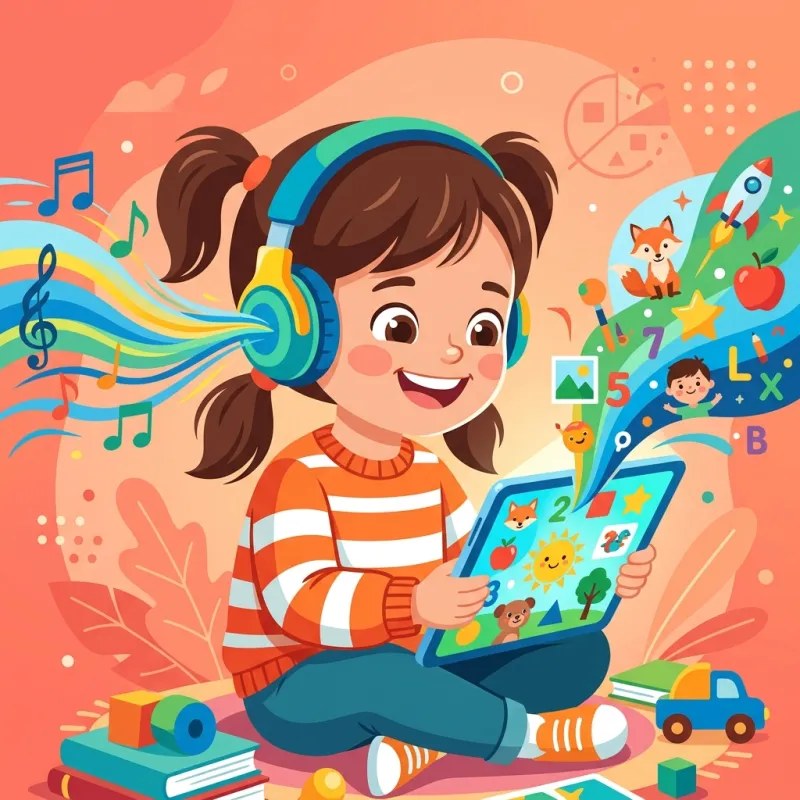
- Immediate audio-visual feedback: A pleasant sound or brief animation when a child interacts correctly with content provides instant gratification that reinforces learning behaviors.
- Progressive disclosure: Revealing new content categories as children demonstrate mastery of earlier ones creates a sense of discovery and accomplishment that motivates continued learning.
- Repetition with variation: Presenting the same educational content in slightly different contexts — different colors, different arrangements, different accompanying images — keeps repetition from becoming monotonous while still reinforcing the core concept.
- Auto-pacing: Features like Sikho Kids' Auto Swipe automatically advance content at an appropriate pace, maintaining engagement for children who might otherwise get stuck or lose interest on a single card.
Gamification vs. Distraction
A common concern among educators and parents is that gamification might prioritize entertainment over education — that children might become focused on earning rewards rather than actually learning. This is a legitimate concern, and it highlights the importance of distinguishing between well-designed gamification and superficial game elements.
Effective gamification integrates game mechanics seamlessly with educational content so that the reward comes from the learning itself, not from some unrelated game layer on top. When a child hears the correct pronunciation of a Hindi letter after tapping on it, the audio feedback serves as both a reward and a learning tool. The game mechanic and the educational content are one and the same.
Poorly designed apps, by contrast, might reward children with access to an unrelated mini-game after completing a certain number of educational tasks. This approach teaches children that the educational content is an obstacle to be endured, not an experience to be enjoyed. Parents should be wary of apps that treat learning as a toll gate and play as the destination.
Real-World Impact
Studies consistently show that gamified educational interventions improve learning outcomes across a range of domains. A meta-analysis published in the Educational Research Review found that gamification significantly improved learning outcomes, with the strongest effects seen in younger learners and in domains requiring factual knowledge and rote learning — precisely the kind of learning that characterizes early childhood education.
For children learning alphabets, numbers, colors, shapes, and vocabulary words, gamified approaches can reduce the time needed to achieve mastery while increasing retention and enjoyment. This is not a small benefit — in a phase of life where children are building the foundations for all future learning, every advantage matters.
The best educational games do not feel like education at all to the child — they feel like play. And that is exactly the point.
Gamification, when implemented thoughtfully, transforms the sometimes tedious process of early learning into an adventure that children actively seek out. By choosing educational tools that leverage proven game mechanics responsibly, parents can give their children the gift of loving to learn — a gift that will serve them for the rest of their lives.