Color is one of the first properties of the visual world that captures a baby's attention. Even newborns show preferences for bold, high-contrast patterns, and by the age of three months, most infants can distinguish between different colors. Yet learning to name colors and to sort objects by color is a surprisingly complex cognitive achievement that unfolds gradually over the first several years of life. Understanding how this process works helps parents support their child's color learning effectively.
The Science of Color Perception
Color perception is hardwired into the human visual system. The retina contains three types of cone cells, each sensitive to different wavelengths of light — roughly corresponding to red, green, and blue. The brain combines signals from these cones to create the rich spectrum of colors we perceive. By about four months of age, an infant's color vision is fully developed, meaning they can see the full range of colors that adults can see.
However, perceiving a color and naming it are two very different things. The ability to name colors requires children to master a conceptual abstraction — understanding that a red ball, a red car, and a red shirt all share a property called "red" despite being very different objects. This categorization skill is a major cognitive milestone that most children achieve between ages two and four, with significant individual variation.
The Developmental Timeline
Parents often worry that their child is "behind" if they cannot name colors by a certain age. Understanding the typical developmental timeline can alleviate these concerns.
- 12-18 months: Children can match objects of the same color when shown examples, even though they cannot name the colors yet. This demonstrates that they perceive color differences before they can articulate them.
- 18-24 months: Children begin to understand that colors have names. They may start using color words, though often incorrectly — calling everything "blue" or applying color names randomly. This experimentation with color words is a normal and important part of the learning process.
- 2-3 years: Most children can correctly name at least two to three colors. The primary colors — red, blue, and yellow — are typically learned first because they are perceptually distinct and frequently named by parents and caregivers in everyday conversation.
- 3-4 years: Children can usually name eight to ten colors and can sort objects by color reliably. They begin to understand more nuanced color concepts like "light blue" versus "dark blue."
- 4-5 years: Color knowledge is well established, and children can use color descriptions flexibly in conversation and creative activities.
Why Color Learning Matters Beyond Colors
Teaching children colors is not just about colors themselves — it is about developing fundamental cognitive skills that transfer to many other domains. Color learning exercises several critical mental processes.
Categorization: Grouping objects by color is one of the earliest classification tasks children perform. This same cognitive mechanism underlies all future scientific and mathematical thinking, from sorting animals into species to organizing data into categories.
Language development: Color words are some of the first adjectives children learn to use. Mastering descriptive language allows children to communicate more precisely about their world, express preferences, and follow multi-step instructions that include descriptive details.
Observational skills: Learning to notice and name colors sharpens children's visual attention. They become better at noticing details in their environment, a skill that benefits all areas of learning from reading to science to art.
Memory: Associating color names with specific visual experiences strengthens memory encoding and retrieval processes. These same memory skills are essential for learning letters, numbers, and vocabulary words.
Effective Strategies for Teaching Colors
The most effective color learning happens through natural, everyday interactions rather than formal lessons. Here are strategies that research and classroom experience have shown to be particularly effective.
Start by naming colors frequently in context. Instead of drilling your child with color flashcards, weave color words into your daily conversations: "Let's put on your red shoes," "Look at the yellow banana," "Can you find the blue cup?" This contextual exposure helps children learn that color is a meaningful, useful property of objects rather than an abstract concept to be memorized.
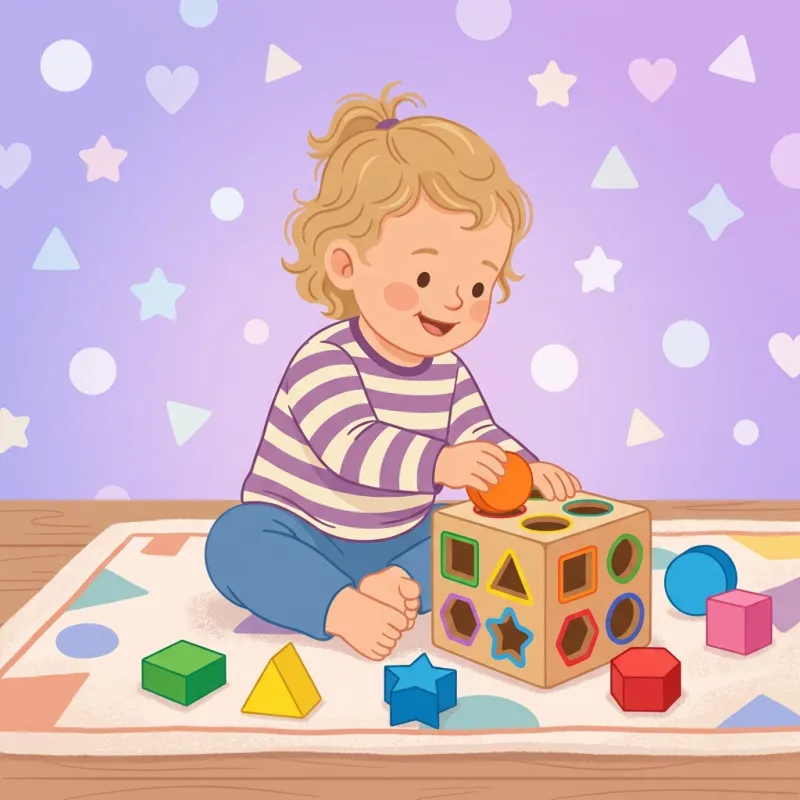
Use sorting activities with real objects. Give your child a collection of colorful items — blocks, buttons, fruit, or toys — and encourage them to group them by color. This hands-on sorting reinforces the concept that color is a shared property that can transcend object type. A red block and a red apple belong together in the "red" group, despite being very different things.
Leverage digital tools like Sikho Kids' colors module. The app presents colors in a clear, uncluttered format with audio pronunciation, helping children connect the visual experience of a color with its spoken name. The simplicity of the flashcard format is actually an advantage here, as it isolates the color concept from the complexity of real-world objects, making the abstraction easier to grasp.
Create art projects that focus on individual colors. Spend a day exploring red — paint with red paint, eat red strawberries, wear a red shirt, read a book about a red fire truck. This immersive approach creates rich, multisensory memories associated with the color name, dramatically strengthening recall.
When to Be Concerned
While the timeline for color learning varies widely among typically developing children, there are situations where a parent might want to consult a pediatrician. If a child over age four cannot name any colors despite regular exposure, or if they consistently confuse colors that are perceptually very different (like red and green), a vision screening for color blindness may be appropriate. Color vision deficiency affects approximately eight percent of males and half a percent of females, and early identification allows parents and teachers to make appropriate accommodations.
For most children, however, patience and consistent exposure are all that is needed. Color learning, like so many aspects of early childhood development, cannot be rushed — but it can be supported through joyful, engaging activities that make the world of color come alive.